
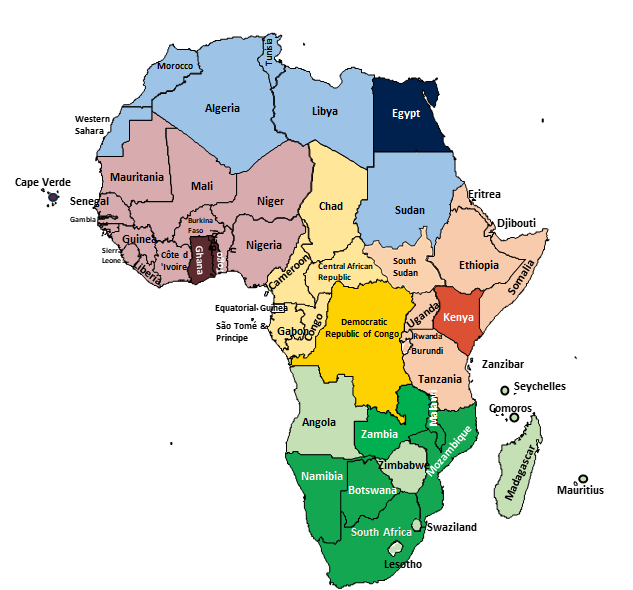
Future Earth is a global research and innovation network advancing sustainability science, transformative solutions, and evidence-based policy through inclusive and collaborative approaches. Within this framework, the Future Earth Africa Hub serves as the continent’s coordinating platform, ensuring that African and broader Global South perspectives shape regional and global sustainability agendas. To reflect Africa’s ecological, cultural, and socio-economic diversity, the Hub operates through five Regional Nodes - Central, East, North, Southern, and West Africa - hosted by leading institutions across the continent.
Between March and October 2025, the National Research Foundation and the Future Earth Africa Hub Leadership Centre conducted technical visits to all five Regional Nodes. These visits aimed to support Node operationalisation, strengthen governance and alignment with the Hub’s vision, discuss Monitoring, Evaluation and Learning processes, explore sustainability strategies, and identify opportunities for regional programming, capacity building, and science–policy engagement.
Across all regions, the visits confirmed strong institutional commitment and growing momentum toward decentralised, context-responsive sustainability science. Each Node demonstrated distinctive thematic strengths and proposed leadership of new science clusters, including sustainable cities, pollution management, smart agriculture, sustainable energy, and transdisciplinary capacity building. Host institutions showcased substantial research infrastructure, international partnerships, and regional networks that can be leveraged to advance the Future Earth agenda. The visits also highlighted early progress in governance structures, stakeholder mapping, and early-career researcher development, alongside challenges related to funding constraints, branding consistency, and coordination between co-host institutions.
Key cross-cutting outcomes included agreement on the need to strengthen governance and coordination mechanisms, accelerate implementation of the MEL framework, formalise thematic science clusters, and promote joint resource mobilisation. The visits further underscored opportunities for inter-Node exchange programmes, shared use of research infrastructure, and enhanced communication and visibility. The technical visits affirmed the viability and strategic value of the Regional Node model. With targeted follow-up actions - particularly in governance harmonisation, resource mobilisation, and peer learning - the Future Earth Africa Hub is well positioned to scale impact and ensure African-led sustainability science meaningfully informs continental and global transformation pathways.