By: Lance Myburgh
Amahle Mayi’s journey to Rhodes University did not follow the neat, uninterrupted path that so often defines academic success on paper. Instead, it unfolded slowly, shaped by reflection, support, and a growing understanding that potential does not always announce itself through immediate performance.
Born and raised in Makhanda, Amahle grew up surrounded by extended family and a community that remained constant even as his schooling journey presented challenges. He attended Samuel Ntsiko Primary School and later Nombulelo Secondary School, where he describes himself as a learner who did not always reach his full academic potential. Yet, glimpses of ability were always present. Mathematical Literacy stood out, with distinctions earned intermittently throughout his high school years.
Looking back, Amahle identified peer pressure as one of the most significant obstacles he faced during his schooling. Finding his own direction took time, but the experience would later become a foundation for resilience rather than a mark of failure. “It was a learning curve, but it ultimately helped me develop resilience and a growth mindset,” he reflected.
This tension between ability and outcome lies at the heart of much of Rhodes University’s research into education, youth development and social inequality. Scholars at the institution have long argued that academic performance is often shaped less by talent alone and more by access to support, guidance and environments that allow learners to flourish at their own pace.
That belief is not confined to lecture halls. Through initiatives such as the GADRA Matric School, research into educational access and second-chance learning is translated into tangible support for students navigating complex schooling pathways.
Amahle’s experience with GADRA marked a turning point. After completing matric, he took a gap year in 2024, using the time to reflect on his goals and reassess his academic direction. In 2025, he returned to GADRA to upgrade his results, supported by a programme closely associated with Rhodes University. Alongside academic assistance, he received guidance through the university application process and early exposure to campus life. Amahle said, “I appreciated the program's association with Rhodes University as it allowed me to get a head start on university life.”
For Rhodes University, this approach reflects a broader commitment to serving the common good through research that addresses real-world challenges. Studies into education, inequality and youth transitions consistently highlight that non-linear routes into higher education are not anomalies but realities for many South African students. By responding to this evidence, the university positions itself as an institution willing to rethink traditional measures of success.
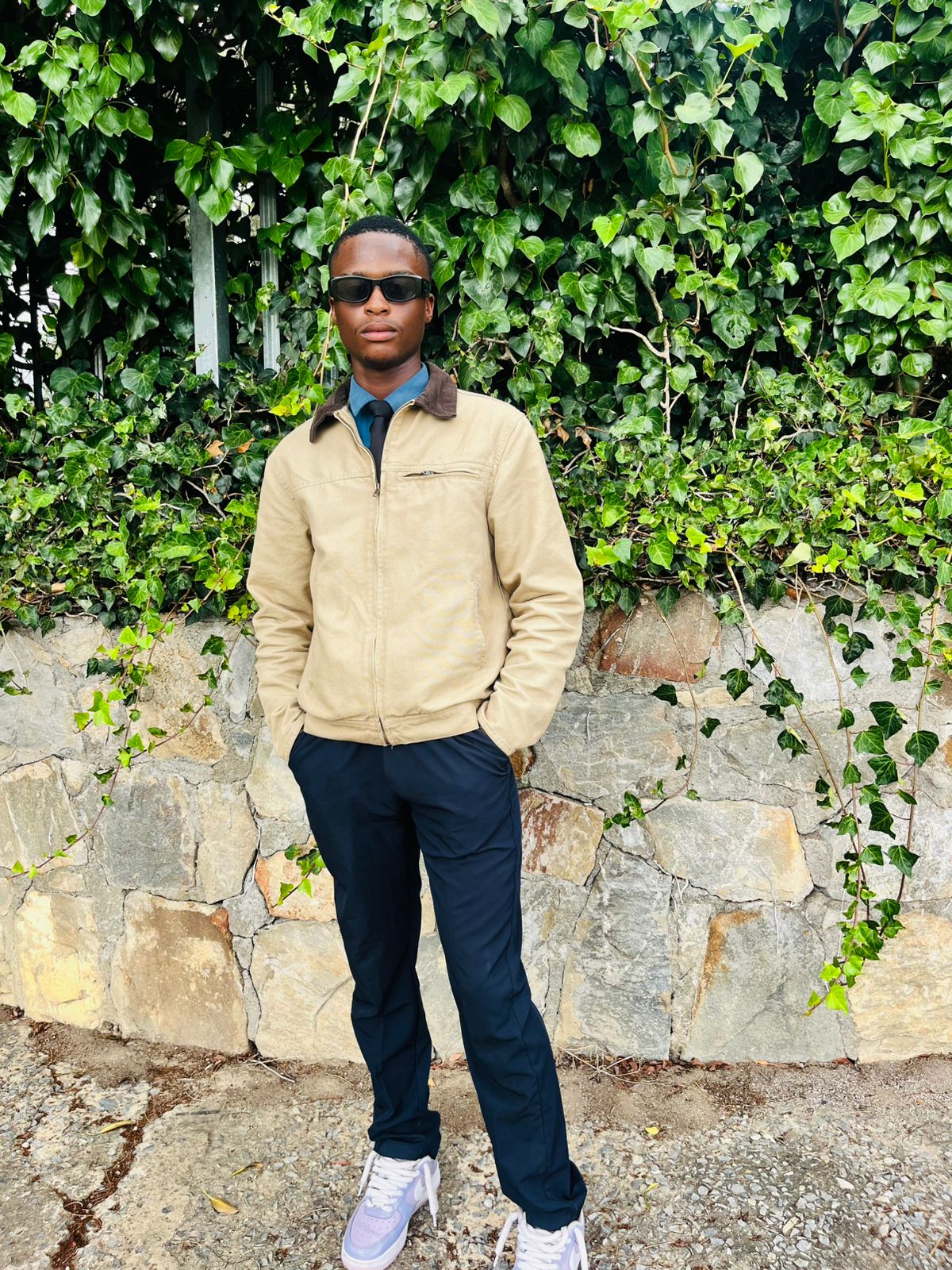
Amahle’s eventual registration at Rhodes University in 2026 carried a significance that went beyond administrative formality. Receiving his student card marked the culmination of years of perseverance and support. “I am now thrilled to be starting my BA degree at Rhodes University in 2026, knowing that this is just the beginning of my journey,” he said. His decision to pursue a Bachelor of Arts degree reflects both confidence and openness to possibilities. Initially, Amahle had planned to complete a Postgraduate Certificate in Education and become a Mathematical Literacy teacher. Exposure to university life, however, has broadened his aspirations. He now views his time at Rhodes as an opportunity to explore new interests and develop in ways he had not previously imagined.
For potential funders and members of the public, stories such as Amahle’s offer a clear illustration of how research-driven interventions can change lives. Investment in programmes grounded in evidence does not simply improve pass rates; it reshapes trajectories, restores confidence, and unlocks talent that might otherwise remain unseen.
As he embarks on his studies at Rhodes University, his journey stands as a reminder that performance is often a moment, while potential is a process. With the proper support, informed by thoughtful research and a commitment to social impact, that process can lead to outcomes that benefit not only individual students but the broader society they will one day serve.