
Pathways to Success: Creating Space for First-Year Voices to Facilitate Transition and Student Success at Rhodes University
Date Released: Tue, 14 April 2026 10:22 +0200By Siyamthanda Hobo
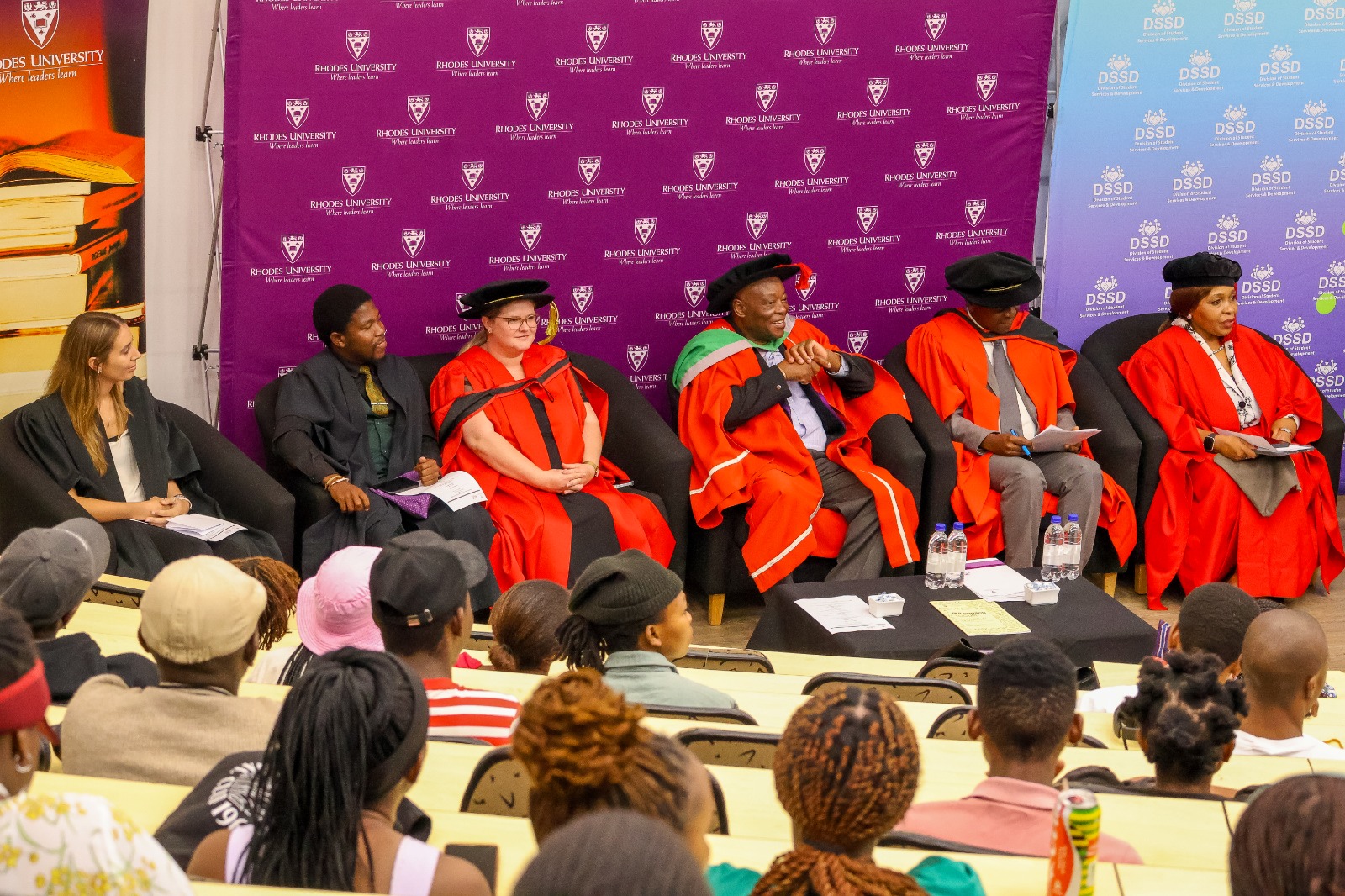
The Office of the Deputy Vice-Chancellor: Academic and Student Affairs at Rhodes University recently hosted the first Pathways to Success session, bringing together staff, student leaders, and first-year students for an evening of reflection, dialogue, and shared learning. More than a formal programme, the session positioned itself as a meaningful engagement, one that acknowledges the complexities of the first-year experience while actively creating a space for student voice, concerns, and aspirations.
At its core, the event was designed to move beyond traditional orientation structures and instead foster an ongoing conversation about what it truly means to succeed at university. Through a combination of personal reflections, institutional insight, and interactive discussion, the session foregrounded a key message: student success is both a shared responsibility and an active process.
The evening began with a warm and engaging welcome from a first-year student, who immediately set the tone for participation and openness. Addressing both the panel and the audience, she encouraged students to take ownership of the space: “We are here to speak to you… we are here to have conversations with you. So please feel free to ask the questions you want to ask.” This invitation to engage was significant, signalling that the session would prioritise dialogue rather than one-directional communication.
“Your success is our priority.”
Dr. Pakiso Tondi (Director of Student Services and Development)
Opening the formal programme, Dr Pakiso Tondi welcomed students to what he described as “the beginning of an important conversation.” He framed Pathways to Success as more than just an initiative, but as a structured effort to create a space where students can reflect, share experiences, and develop practical strategies for navigating university life.
Dr Tondi emphasised the guiding principle behind the programme: “Your success is our priority.” This statement, while simple, carries significant institutional weight. It reflects a commitment not only to academic performance but also to holistic student development, recognising that success encompasses personal growth, well-being, and a sense of belonging.
He reminded students that their presence at Rhodes University is not accidental, but the result of dedication and achievement. At the same time, he stressed that success at university requires intentional effort:
“We are not here by chance. We are here because we have a mandate to make sure that you succeed.”
Drawing on a well-known quote often attributed to the Brazilian soccer star Pelé, Dr. Tondi reinforced the idea that success is an ongoing process:
“Success is no accident. It is hard work, learning, studying, sacrifice, and most of all, love for what you are doing.”
Importantly, he highlighted that while the university provides support structures, students must actively engage with them. This dual responsibility between the Institution and a student formed a recurring theme throughout the session.
Rethinking Access and Success
Eric Ofei introducing Prof Monnapula-Mapesela
In introducing the Deputy Vice-Chancellor: Academic and Student Affairs, Eric Ofei situated Professor Monnapula-Mapesela’s work within broader debates in higher education. He challenged the idea that access alone is sufficient, urging students and staff to consider what meaningful success looks like beyond admission.
“The true measure of a university is not how many students access its gates, but how many are supported, developed, and guided into success.”
This framing is particularly relevant within the South African context, where increasing access to higher education remains a national priority. However, as Ofei emphasised, access without adequate support risks reproducing inequality rather than addressing it.
He highlighted Professor Monnapula-Mapesela’s extensive academic and leadership experience, particularly her research on first-year student preparedness and transition. Her work, he noted, continues to shape how institutions respond to the realities faced by students entering higher education.
“Access is not enough.”
Prof Monnapula-Mapesela (DVC: Academic & Student Affairs)
In her address, Professor Monnapula-Mapesela offered a deeply reflective and personal perspective on success, drawing on her own academic journey to illustrate that pathways are not always linear. She spoke candidly about how her initial aspirations shifted over time, emphasising that this did not represent failure, but rather adaptation:
“I did not stop dreaming… I simply redirected my dream.”
Her message to students was clear: setbacks, uncertainty, and change are part of the journey, but they should not lead to giving up. Instead, students should remain committed to their goals, even if the path towards achieving them evolves.
A central theme of her address was the distinction between access and success:
“Access does not end with entering the gates of a university. You must get to the end and graduate.”
This statement underscores a critical challenge in higher education: the need to support students not only in entering university but in completing their studies successfully. Professor Monnapula-Mapesela encouraged students to be intentional about progressing through their degrees, emphasising the importance of completing their studies within regulation time.
She also spoke about the significance of background and identity, encouraging students not to view their pasts as limitations:
“I do not see my past as a disadvantage, but as something that shaped me.”
In doing so, she reframed narratives of disadvantage into narratives of resilience and strength, offering a powerful message of empowerment.
“You are the 10%.”
Prof Sandile Khamanga (Dean of Pharmacy)
Prof Sandile Khamanga provided a broader perspective on the significance of students’ presence at Rhodes University by situating it within national educational trends. Using statistical insights, he illustrated how few learners who begin schooling ultimately reach higher education:
“Out of all the learners who start school, only about 10% will make it to where you are today.”
This perspective served as both a reality check and a motivational message. It reminded students of the value of the opportunity they have been given, while also highlighting the responsibility that comes with it.
Prof Khamanga emphasised that success requires intentionality, discipline, and self-awareness. He encouraged students to set clear goals and remain accountable to themselves, noting that a lack of direction can lead to missed opportunities and increased stress.
He also addressed the importance of mindset, particularly the dangers of negative self-talk:
“When you start to believe negative things about yourself, it becomes difficult to succeed.”
In addition, he highlighted the role of social environments, encouraging students to form friendships that align with their goals and aspirations. He cautioned against remaining in comfort zones, explaining that growth often requires discomfort:
“Pressure is natural. It is part of the process of growth.”
Navigating Transition and Mental Health
Stephanie Marais (Intern Counselling Psychologist, Rhodes University Counselling Centre)
Stephanie Marais focused on the emotional and psychological aspects of the first-year experience, acknowledging that the transition to university can be both exciting and overwhelming. She recognised that many students are navigating new environments, increased academic demands, and, in some cases, distance from family and support systems.
“You are here for a reason. Each of you has the potential to grow, learn, and achieve your goals.”
She reassured students that feelings of anxiety, uncertainty, and self-doubt are normal, particularly in the early stages of university. Rather than viewing these experiences as signs of failure, she encouraged students to see them as part of the adjustment process.
Drawing from her own academic journey, she spoke about experiencing rejection and the importance of persistence. She emphasised the value of adopting a growth mindset, an approach that views challenges as opportunities for learning rather than as barriers.
“Setbacks do not define your ability. What matters is how you respond to them.”
She also highlighted the services offered by the counselling centre, including free short-term individual counselling, group workshops, and career support. By making these resources visible, she reinforced the message that seeking help is not a weakness, but a proactive step towards success.
“Your beginning does not determine your destination.”
Thembelani Chili (Student Representative and Postgraduate Student)
Thembelani Chili’s contribution stood out as one of the most powerful moments of the evening, as he shared a deeply personal narrative of resilience, growth, and transformation. The “I Am Poem”. Reflecting on his identity and background, he described how higher education once felt distant and unattainable:
“University was never a conversation in my household.”
He spoke openly about the challenges he faced upon arriving at university, including language barriers, academic pressure, and feelings of not belonging. These experiences are common among first-year students, particularly those from underrepresented backgrounds.
After failing a module in his first year, he experienced significant self-doubt:
“I began to question whether I belonged here.”
However, through persistence, support, and self-belief, he was able to overcome these challenges. His journey eventually led to academic excellence, leadership roles, and postgraduate study.
His message to students was both encouraging and empowering:
“Failure does not define you. Your response to it does.”
“Your beginning does not determine your destination.”
By sharing his story, he provided a relatable and inspiring example of what is possible, reinforcing the idea that success is not predetermined but built over time.
“From Passenger to Driver.”
Dr Tracy Kitchen
The session concluded with an interactive engagement led by Dr. Tracy Kitchen, who introduced the concept of agency through a relatable metaphor:
“You are on a journey—but the question is, who is driving?”
Using the idea of a road trip, she encouraged students to reflect on whether they are actively directing their journeys or passively allowing circumstances to shape their experiences.
Students were invited to share challenges they had encountered in their first six weeks, including time management, procrastination, academic pressure, and fear of asking questions. This exercise revealed that many students face similar struggles, helping to normalise these experiences.
Dr. Kitchen introduced the concept of “passenger behaviour” versus “driver behaviour,” encouraging students to move towards more active engagement:
“Success requires that you take control of your journey.”
She emphasised practical strategies such as preparing for lectures, asking questions, collaborating with peers, and challenging negative thought patterns. By doing so, she reinforced the importance of agency as a key component of success.
Conclusion
The Pathways to Success session highlighted the importance of creating spaces where students can meaningfully engage with both their peers and institutional leaders. By combining personal narratives, academic insight, and practical guidance, the session offered a holistic approach to understanding student success.
At Rhodes University, initiatives such as this reflect a broader commitment to supporting students not only in accessing higher education but in thriving within it. The session underscored that success is not a fixed outcome, but a continuous process shaped by effort, resilience, and support.
Ultimately, the evening left students with a clear message: while the university provides the tools, resources, and community, it is up to each individual to take ownership of their journey. Success, as emphasised throughout the session, is not accidental; it is intentional, supported, and built over time.
Source:The Division of Communications & Advancement