
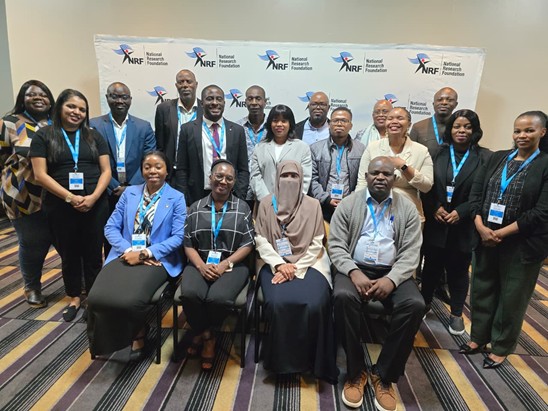
The Future Earth Africa Hub Director opened the meeting, emphasising the strategic role of Regional Nodes in addressing Africa’s diverse ecological, socio-economic, and cultural landscapes. Participants introduced themselves and outlined their respective mandates, providing an overview of regional diversity and complementary strengths within the network. The objectives, expected outcomes, and structure of the meeting were presented to establish a common understanding.
The discussions focused on aligning the Regional Nodes with the Future Earth Africa Hub’s vision and strategic priorities. An overview of Future Earth’s global mandate and the Africa Hub’s role within frameworks like Agenda 2063 and the Sustainable Development Goals was provided. Key operational milestones and challenges for 2025 were reviewed, and participants engaged in substantive dialogue about governance and operational arrangements for the Regional Nodes, examining proposed decision-making structures and responsibilities of Node Directors. Challenges related to transparency, financial management, and legal status were discussed, leading to the general agreement that existing Terms of Reference may need enhancement to empower the Regional Nodes, particularly in resource mobilisation and partnerships.
Regional priorities such as climate resilience, food and water security, biodiversity loss, and energy transitions were highlighted through presentations by Node Directors. Despite regional differences, participants identified several thematic areas ripe for cross-regional collaboration. The dialogue emphasised the importance of strengthening partnerships with policymakers, donors, and regional institutions to increase impact and visibility. The meeting successfully laid the groundwork for ongoing collaboration, including the development of a joint work plan for 2026 and beyond, while also strengthening governance, reporting, and fundraising mechanisms to support transformative sustainability science across Africa.