
New global study reveals human-made chemicals now widespread in the oceans
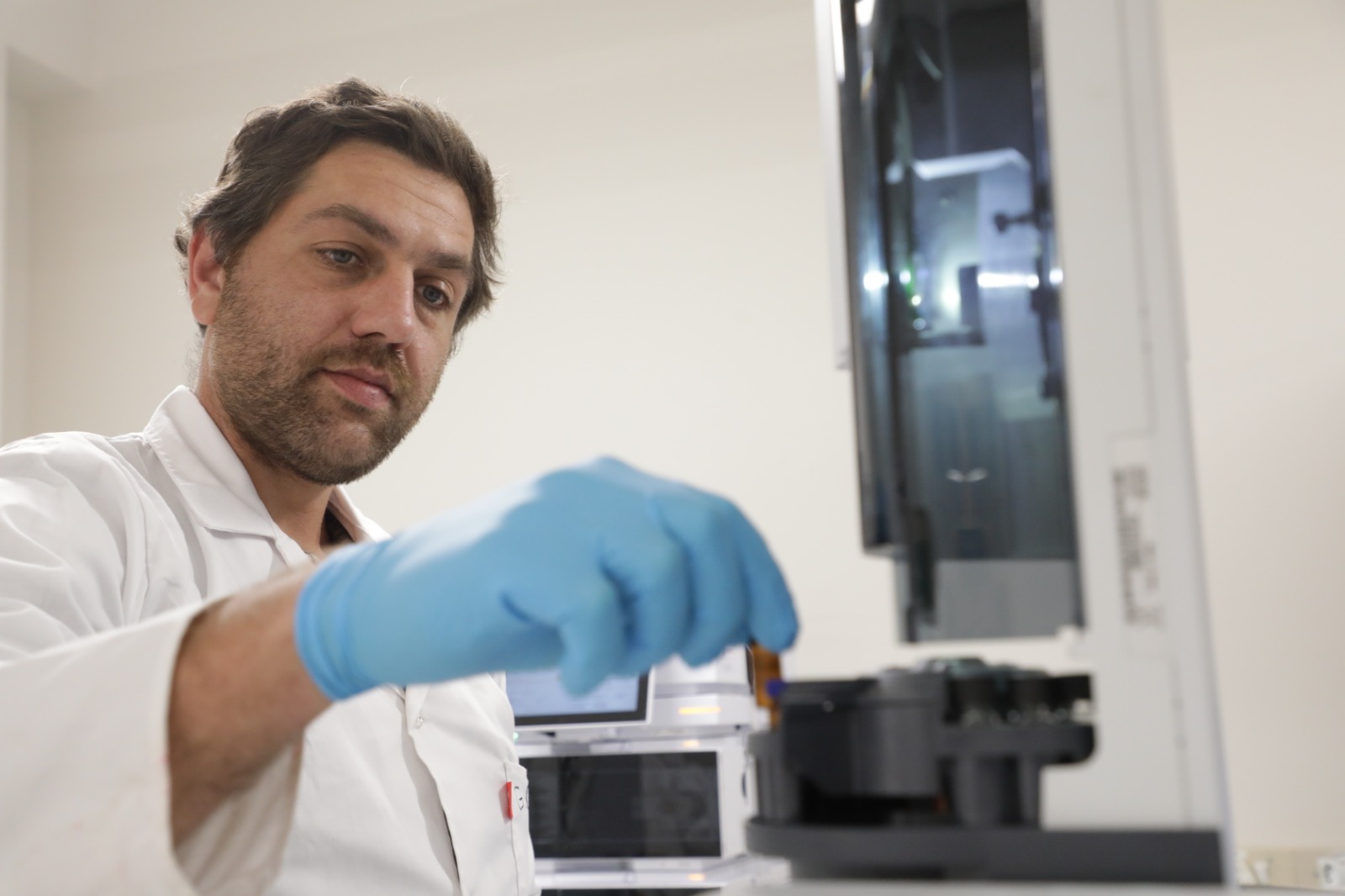
Date Released: Tue, 17 March 2026 08:42 +0200A global study led by Rhodes University researcher Dr Jarmo-Charles Kalinski and University of California, Riverside Professor Daniel Petras has found that human-made chemicals are now a pervasive component of marine dissolved organic matter (DOM), highlighting the extent to which industrial pollution has become embedded in ocean ecosystems.
The research, published in Nature Geoscience on 16 March 2026, represents a major international collaboration involving 30 researchers from 19 institutions across seven countries, including South Africa, the United States, Germany, Brazil, the Netherlands, Taiwan and Chile.
The study represents the largest meta-analysis of marine non-targeted mass spectrometry data to date, marking a significant shift from previous investigations that were typically restricted to small, regionally focused areas. By utilising high-resolution mass spectrometry and scalable computational tools, the team mapped the presence of human-made organic chemicals, known as xenobiotics (chemicals that do not naturally occur in marine ecosystems), within the ocean's DOM pool across 21 public datasets comprising 2,315 seawater samples from the Pacific, Atlantic and Indian Oceans.
Included in this global analysis was a previous study by Dr Kalinski and Professor Petras conducted in the Eastern Cape, South Africa, while Dr Kalinski was a postdoctoral researcher in Professor Rosemary Dorrington’s group. This provided insight into the DOM of Algoa Bay and its estuaries – the Swartkops and Sundays rivers.
During the analysis, Dr Kalinski made another discovery: "I expected there to be much more cohesive or coherent knowledge available when I started this project, and the fact that there is not is quite worrisome," said Dr Kalinski. "We found that industrial chemicals, many of which are rarely monitored, may be far more abundant and widespread than previously recognised."
The findings show that while pesticides and pharmaceuticals appear largely concentrated near shorelines, industrial compounds, such as plastic additives, lubricants and surfactants, dominate the human chemical signal even in the open ocean. In typical coastal environments, human-derived molecules accounted for up to 20 percent of the total detected signal, and even 20 kilometres offshore, these compounds still accounted for roughly 1 percent.
Scientists warn that these chemicals may influence marine microbial processes and the ocean’s carbon cycle, though the long-term ecological consequences remain largely unknown.
This detected signal acts as a global ‘chemical fingerprint’, allowing researchers to estimate the proportion of human-made molecules (the ‘imprint’ of pollution) against the background of natural organic matter in the sea.
The research team utilised a key innovation: the combination of standardised mass spectrometry methods with scalable computational tools. This allowed them to treat thousands of samples from unrelated studies as a single, unified dataset.
“This work was only possible because of the efforts of our collaborators around the globe and open science,” said Professor Petras. “By making our data public, we hope to accelerate research and enable a more complete understanding of human chemical impacts on the ocean.”
Dr Kalinski emphasised that the study also serves as a call to action for the global scientific community to adopt unified protocols and open-science principles, an idea explored further in another recent paper emerging from the same research project.
"It’s our duty as scientists to make robust research data available for everyone because we are working together: the scientific community and the human community in a bigger context," Dr Kalinski said.
The researchers conclude that long-term, standardised monitoring efforts are essential to track human chemical impacts and understand the risks posed to marine food webs and ecosystem resilience.
Source:Communications