A decade of encouragement shaping futures in Makhanda [PIC: Ntomb'Zekhethelo Ncanana]
Date Released: Tue, 17 March 2026 11:55 +0200By Siyamthanda Hobo
On a quiet afternoon in a Makhanda classroom, a Rhodes University student sits beside a high school learner, working through a maths problem that once seemed impossible. The answer eventually appears on the page, but something else happens too: the learner begins to believe that university might one day be within reach.
Moments like these have unfolded thousands of times over the past decade through Rhodes University Community Engagement’s Nine Tenths mentoring programme.
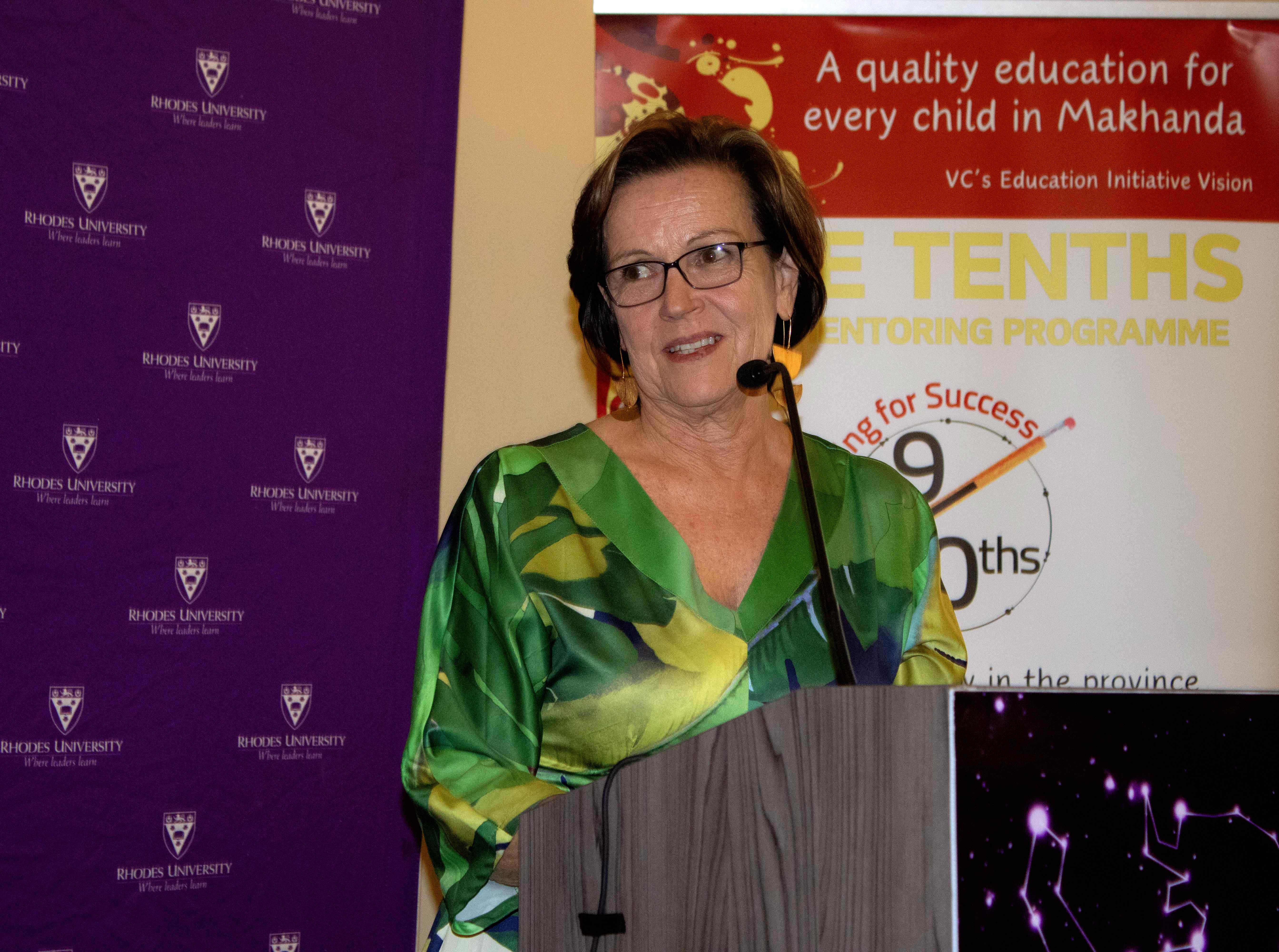
On 3 March 2026, the University celebrated ten years of the initiative, bringing together mentors, learners, teachers, school leaders and community partners to reflect on a partnership that has steadily expanded educational opportunity in the city.
The evening served not only as a celebration but also as a moment of reflection on what can happen when a university recognises its responsibility to the communities within which it exists.
Encouragement as a catalyst
At the centre of the reflections was an address delivered by Rhodes University Vice-Chancellor Professor Sizwe Mabizela, whose leadership has played a central role in shaping the University’s approach to community engagement.
In his remarks, Professor Mabizela reflected on the broader vision guiding Rhodes University’s involvement in local education initiatives. When he assumed office in 2015, he emphasised that the purpose of a university extends beyond academic excellence. Universities, he argued, must actively engage with the social realities around them.
“The true measure of a university’s excellence lies in the depth and integrity of its engagement with society,” he said.
He further reflected on the responsibility of Rhodes University to address inequalities within its surrounding community.
“Our future and our success as Rhodes University are inextricably bound up with the future and success of the greater Makhanda community,” he said, echoing a message first delivered in his inaugural address.
The University, he insisted, must send a clear message that it is “not just in Makhanda but also of and for Makhanda.”
These principles laid the foundation for the Vice-Chancellor’s Education Initiative, which sought to strengthen partnerships with local schools and improve educational outcomes for learners in Makhanda.
Education, Professor Mabizela explained, was deliberately chosen as the focus of these efforts because it remains one of the most powerful mechanisms for social transformation.
“Education offers not only skills, but hope; not only qualifications, but transformation.”
A programme rooted in partnership
The Nine Tenths mentoring programme emerged from this broader vision of community engagement.
Dr Ashley Westaway of Rhodes University’s top feeder school GADRA Education, reflected on the origins of the initiative, tracing its development to early conversations about strengthening public education in the city. The mentoring programme was one of the first projects conceptualised within the framework of the Vice-Chancellor’s Education Initiative.
Initially introduced in just two schools, the programme paired Rhodes University students with high school learners who would benefit from academic guidance and mentorship.
Over time, the initiative has expanded to include six partner schools across Makhanda, reaching hundreds of learners each year. As a measure of its success, Nine Tenths received recognition by the Talloires Network in 2021 by winning first place in the MacJannet Prize for Global Citizenship, beating over 388 universities in 77 countries.
The programme’s name carries its own significance. Drawing on a quote by the French writer Anatole France, organisers adopted the idea that “nine tenths of education is encouragement.”
The phrase captures the essence of mentorship itself.
Mentors do more than provide academic assistance. They offer reassurance, belief and guidance. Encouragement, in this sense, becomes a critical ingredient in educational success.
The power of student mentorship
Over the past decade, the programme has grown steadily, sustained by the commitment of Rhodes University students who volunteer their time to support local learners.
Since its inception:
- 1,470 Rhodes University students have served as mentors
- 147 students have taken on leadership roles within the initiative
- Mentors have contributed over 53,000 hours of mentorship and academic support
While these numbers demonstrate the scale of the programme, its impact is most visible in the experiences of those who participate in it.
Programmes like Nine Tenths demonstrate how sustained partnerships between universities, schools and community organisations can create practical pathways to educational opportunity.
Nine Tenths Co-ordinator Monica Canca reflected on the values that have sustained the initiative over the years.
“What has sustained the programme is the sense of community that develops between mentors and learners,” she explained. “Mentors understand that they are not simply helping with schoolwork. They are helping young people believe in their own potential.”
For many Rhodes University students, the mentoring experience becomes a powerful learning journey in itself.
“Working with learners reminds our students why education matters,” Canca said. “It deepens their sense of responsibility to the communities around them.”
A shared future
The story of the Nine Tenths programme reflects a broader commitment within Rhodes University to community-engaged scholarship. Located in a city facing deep socioeconomic challenges, the University recognises the importance of working alongside the communities that surround it.
Through partnerships with local schools, organisations and civic institutions, Rhodes University seeks to place its knowledge, skills and resources in service of the public good while contributing to meaningful social change.
The Nine Tenths mentoring programme stands as one example of how this commitment can take practical form.
For learners, mentorship can make education feel less intimidating and more attainable. For Rhodes University students, it offers an opportunity to apply their knowledge in ways that extend beyond the classroom.
And in classrooms across Makhanda, moments like the one described at the beginning of this story continue to unfold: a mentor leaning over a desk, a learner finding the answer to a difficult question, and the quiet realisation that the future may be closer than it once seemed.
Source:Communications