Welcome to the Department of Political and International Studies
In the study of Politics, as with other disciplines in the Humanities, we are interested in learning about the best that has been thought, said and written about human beings living in social and political relationships. We are interested in learning how these thinkers have grappled with, and continue to grapple with, life’s most enduring, fundamental questions: What is justice? What should be defended? What is the appropriate nature of our relationship to the state? What are the legacies of the violent imposition of the state in Africa and elsewhere? Where should the limits of state power over our lives properly lie? What is the nature of our moral obligation to the state and to fellow citizens? How does race, class, gender and sexuality, for example, shape our experiences of citizenship? What do we mean by ‘democracy’ and what are the conditions under which it flourishes and declines? These questions touch on what it is to be human. They are the subject over which wars have been fought and lives have been lost.
The answers to the questions which we ask in Political Studies are the subject of uncertainty and debate. To study Politics is to learn to argue and defend positions, to critically evaluate the nature of the evidence that people provide for what they believe to be true. Because our graduates emerge out of three years of studying Politics as articulate critical thinkers who can read widely with insight and understanding and who are capable of coming to reasoned independent judgments, they are sought-after in business, industry, NGOs, government and academic settings. To study Politics is to learn to be an analytical thinker in possession of the complex, higher order literacy capacities that are a requirement in every facet of a world that is increasingly driven by the need to interact critically, thoughtfully and knowledgeably with large quantities of information.
The Politics Department at Rhodes is a high quality teaching and research environment. We welcome our students into an environment in which debate is encouraged and interaction between students and lecturers including those at the most senior level is frequent and ongoing. The Department prides itself on being informal and friendly while at the same time being exceptionally demanding of our students. We believe that these dual aspects of our practice are what makes us special in the higher education environment.
About
The Department of Political and International Relations offers a full complement of undergraduate and postgraduate courses, ranging from 1st year to PhD level. The undergraduate course offers courses from across the spectrum of political studies, while the postgraduate program allows students to critically engage with a number of topics. The Department regularly updates its curriculum to reflect the changes that South African society and the larger world undergo. Please contact the Department for more information.




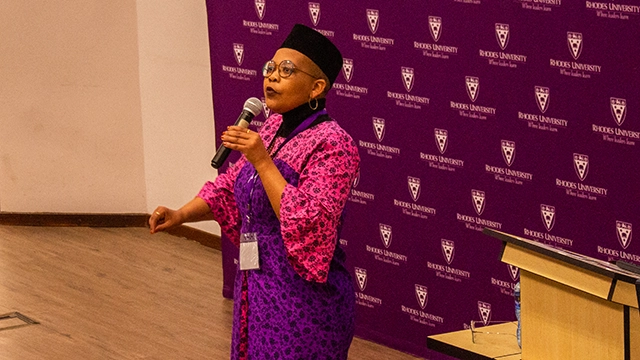
![Image of Master’s candidate, Gugulethu Maqina and Dr Westen Shilaho during the Seminar hosted by the Department of Political and International Studies at Rhodes University. [Photograph by Shepi Mati]](/media/rhodesuniversity/content/rhodesnews/newsimage/Wits_academic_Dr_Westen_Kwatemba_Shilaho.jpeg "news image")

