

South Africa's grasslands, particularly the vital high-elevation systems, are under severe threat from invasive alien plants. These invaders compromise ecosystem integrity, reduce water availability, and directly impact livelihoods. The threat extends beyond the mountains, affecting the entire grassland biome.
A key example is Robinia pseudoacacia (Black Locust). This rapidly spreading tree causes extensive ecological and economic harm by outcompeting native flora for light and space, competing with indigenous plants and crops for pollinators, altering soil nitrogen cycles to the detriment of native plants, and introducing toxins that threaten livestock, with potential losses estimated between R130 million and R961 million.
Historically, there has been limited coordinated research on managing these invasions. The Grassland Weeds Programme builds on the foundation of the former Northern Temperate Weeds Programme to address this gap. Our work aims to determine the distribution and density of invasive species, investigate their ecological and economic impacts, and develop appropriate management strategies.
A core focus is implementing biological control as the most sustainable, cost-effective solution. Our programme covers the full biocontrol pipeline: developing new agents for emerging threats, advancing existing candidates to release, and conducting post-release monitoring of established agents. We also practice pre-emptive biocontrol, proactively identifying and researching new emerging invaders (such as Linaria species - toadflaxes) to develop management options before they become widespread.
Our research targets a broad suite of grassland invaders, including:
Trees: Robinia pseudoacacia (Black Locust), Gleditsia triacanthos (Honey Locust), Acacia species, invasive pines (Pinus spp.), and Salix species (Willows).
Shrubs: Invasive Rosaceae species such as Cotoneaster, Rosa, Rubus
Our integrated research portfolio includes:
Biological Control Development: Advancing agents for Robinia, Gleditsia, Rosa,
Impact Ecology: Studying how invasives like Honey Locust and Rosaceae shrubs alter soil chemistry, insect communities, and act as "nurse plants" to facilitate further invasion.
Management Strategies: Evaluating population dynamics to guide control, such as for willows, and investigating the life cycles of species like Pyracantha and Cotoneaste
We collaborate extensively with national partners (e.g., University of the Free State, ARC-PPRI, SANBI) and international institutions (e.g., CABI Switzerland, Czech Agrifood Research Center). The programme also leads the Southern African Mountains Invasive Alien Plants Working Group.
By combining fundamental ecological research with practical biological control solutions across the entire development pipeline, the Grassland Weeds Programme works to secure the health and productivity of South Africa's critical grassland ecosystems for the future
 |
|
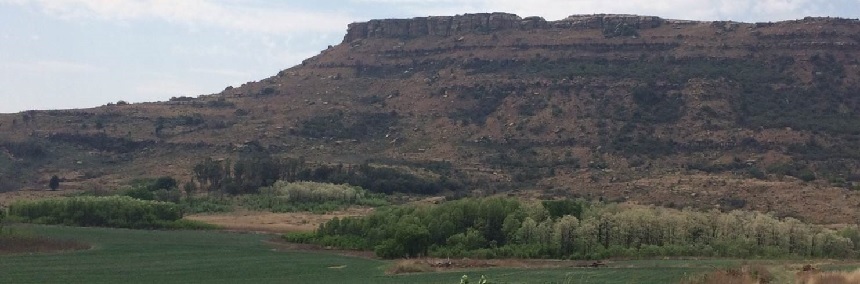
Highland grasslands invaded by high elevation weeds |
Contact details
Please feel free to reach out to us if you need more information
Prof. Grant Martin: g.martin@ru.ac.za
Dr Kim Canavan: k.canavan@ru.ac.za