-1080x1333.png)
Climate change, environmental issues, and their ties to social inequality are some of the most pressing challenges of our time. The Masters in Environmental Education (MEd) is an invitation to explore the intersecting issues of ecological, social, and relational justice through education.
Its focus is centred on strengthening research and practice in Environmental Education, Education for Sustainable Development, and Transgressive Learning. Our vision is to inspire educational research that nourishes regenerative African futures for sustainable development.
The programme is grounded in three core areas of interest:
Education for Sustainable Development
Education for Sustainable Development (ESD) aims to transform education systems and practices for sustainable futures. It includes the related area of Environmental Education.
This area of study seeks to equip learners with the knowledge, skills and values to contribute to more sustainable initiatives, lives, communities, education systems and futures. It addresses critical areas such as curriculum innovation, teaching and learning practices, and skills system development.
Education for Sustainable Development is relevant to all subjects in the curriculum at all levels of the education system, including teacher education, higher and vocational education, as well as the wider skills system. This approach to education understands that people, our planet, and our economies are interconnected, and the health of each one impacts the others.
Transgressive Learning
Integrated into the wider education system studies within the ELRC, is a commitment to understanding and advancing transgressive, expansive and creative forms of learning. Transgressive learning seeks to challenge existing norms, values, and practices that support unsustainable and unjust systems, while engaging more viable alternatives.
By encouraging innovation, play, and transformative approaches to learning, this approach pushes the conventional boundaries of education, empowering the learner to tackle environmental and social problems creatively. It deepens understanding of learning processes and transformative pedagogy which has been identified as a critical area of research and study in transforming education systems worldwide.
Regenerative African Futures
All of the above feeds into a wider commitment to Regenerative African Futures, especially for Africa’s youth. As we grapple with pressing global and local environmental challenges, we are passionate about how education and learning can drive ecological and social justice. Our vision for education builds on the decolonial project in vital ways. For us:
.png)
The Masters is designed for practising environmental education, training and development practitioners, including teachers with various subject specialisms, lecturers and other adult educators, curriculum or resource developers, journalists, writers, researchers, conservationists, development workers, and social learning facilitators.
If you are curious about the questions outlined below, this could be the right programme for you:
The ELRC celebrates what different knowledges can bring to the table. The centre is located within the Department of Education, but research often draws from various disciplines, including economics, agriculture, philosophy, sociology, environmental science, and more.
Whether your background is in education, the social sciences, humanities, science or the arts, or whether you are an experienced practitioner, there is a place for you here.
This intensive two-year Masters supports you in designing and implementing educational research. It can be done on either a full-time or part-time basis.
The programme includes:
Between 10 and 15 scholars are registered in this programme at any one time. Scholars engage in a variety of research projects, including research in community and youth education contexts, workplace learning contexts, schools, colleges and universities. Research includes both micro-level studies and wider system-oriented studies.
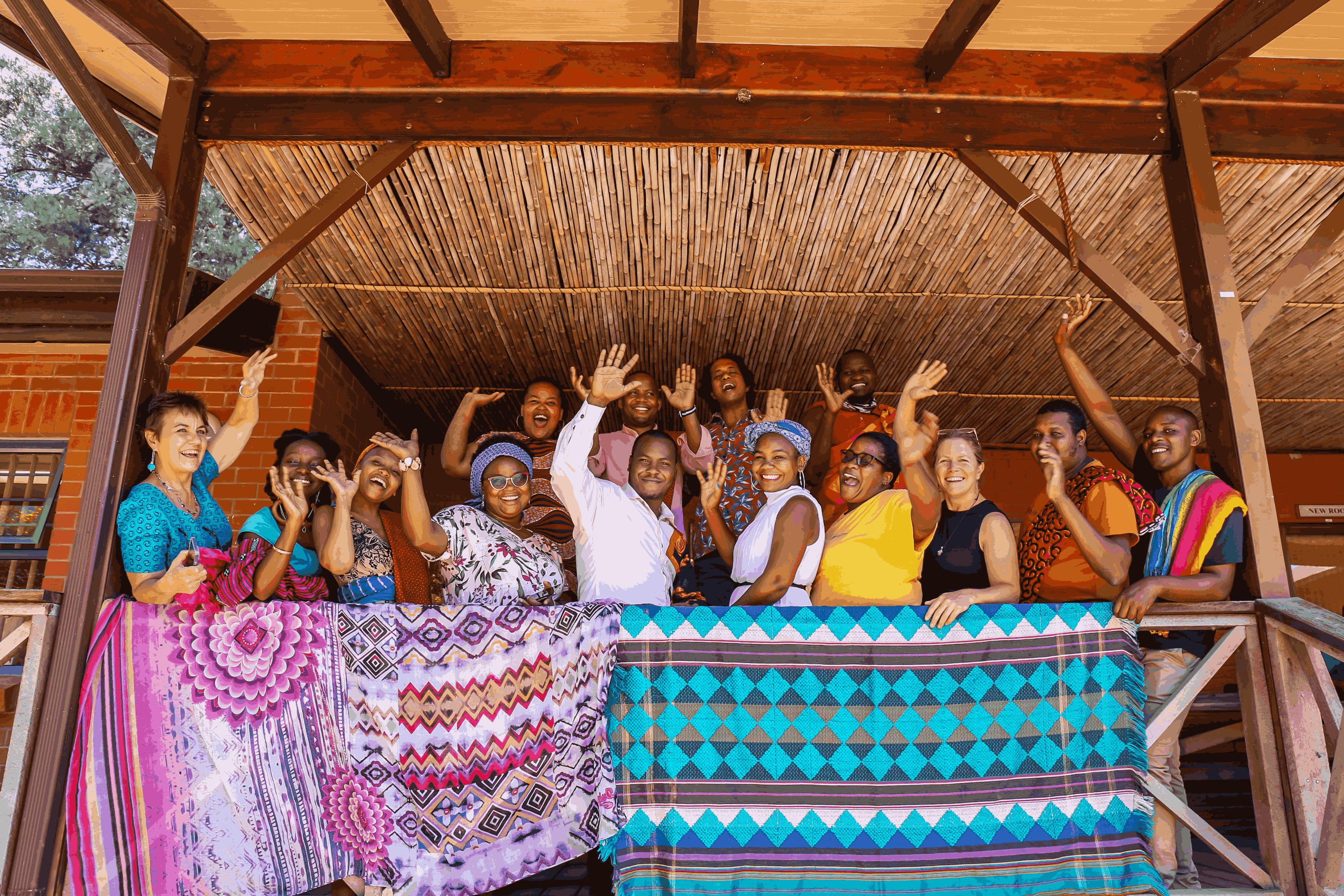
Featuring expert researchers, a strong network of practitioners, and a vibrant group of postgraduate students, the ELRC is a dynamic and active hub of research and learning.
Our scholars are supported through regular Masters weeks (four times per annum), regular seminars, high-quality supervision and support, electronically accessible library resources and access to significant knowledge networks. Excellent facilities exist for full-time scholars at the ELRC.
Our graduates work as practising teachers, as education department officials, subject advisors, education system leaders, and in the conservation and NGO sectors as environment and sustainability educators, course designers, learning facilitators and community and adult education practitioners. They also work in the Sector Education and Training Authorities, and in the wider national system of skills development to strengthen social learning around food, water, energy, climate action and other environment and sustainability priorities.
Admission to the MEd in Environmental Education requires that applicants meet the following criteria:
Some of the Masters scholars can apply for DSI/NRF Bursaries on the DSI/NRF bursary application platform. At times special calls for bursaries are made. Rhodes University also has various bursary opportunities available, so visit the RU postgraduate funding portal on the RU website. NOTE: M.Ed scholars are responsible for payment of their own fees, unless they obtain a relevant bursary.
Visit https://ross.ru.ac.za/. Select Admission (not yet enrolled) and follow the prompts. This degree is registered under the Department of Education.
In addition to the general requirements, your application should be accompanied by:
For more detail, please contact Dr Injairu Kulundu-Bolus at i.kulundu@ru.ac.za
Last Modified: Sun, 09 Jun 2024 10:38:00 SAST