
Research and publications
| PROJECTS | RESEARCH | |
2024 |
New Edited Volumes: Navigating Trauma in African Journalism (Vols 1 & 2) |
|
Volume 1: Navigating Trauma in African Journalism: Scholarly Foundations and Secondary Trauma: https://link.springer.com/book/10.1007/978-3-031-94661-5
The second volume expands the conversation by exploring primary trauma among journalists, gendered experiences of violence and emotional labour, and culturally grounded strategies for journalist trauma mitigation and healing. Across the two volumes, contributors include emerging and established scholars as well as media practitioners and academics from different parts of the world. Together, they bring diverse perspectives, rich theoretical insights, and empirically grounded research that deepen our understanding of trauma and resilience in African journalism. Kind regards |
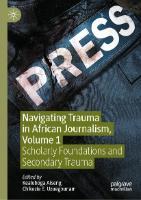 We are pleased to announce the publication of two new edited volumes that advance critical scholarship on journalism, trauma, and care in African contexts. The contributors to these volumes constitute senior and emerging scholars from across sub-Saharan Africa. Both volumes are published by Palgrave Macmillan.
  Volume 2: Navigating Trauma in African Journalism: Primary Trauma, Gendered Dimension, and Mitigation Mechanisms:
2024 |
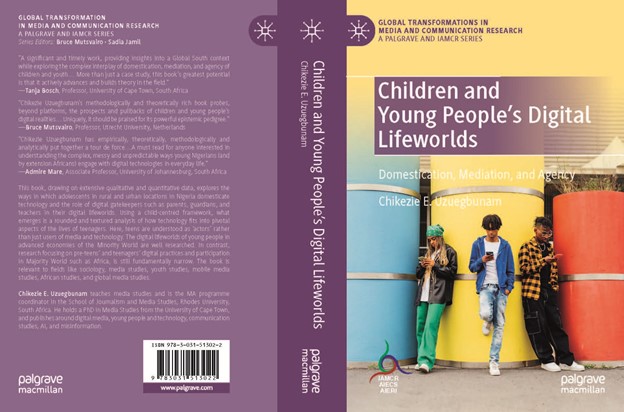
Children and Young People’s Digital Lifeworlds: Domestication, Mediation, and Agency (2024) |
|
Author: Dr Chikezie E. Uzuegbunam Link: https://link.springer.com/book/10.1007/978-3-031-51303-9 Table of contents (10 chapters) 1. Front Matter 2. Researching Children and Young People’s Digital Lifeworlds 3. Context Matters: Geography, Research Sites, and Media Trajectory 4. Tracking Research on Children and the Media 5. Navigating Theoretical, Methodological, and Ethical Interdependences in Researching Children 6. Children’s Access and Connection to Digital Technology 7. Domestication of Technology in Everyday Life 8. Media Proclivities, Preferences, and Perceptions of Digital Technology 9. “You cannot serve two masters at a time”: Digital Gatekeepers in Children’s Digital Lifeworlds 10. Precarious Agency and the Power of Children with Digital Technology 11. A Bricolage: Of Summary, Final Thoughts, and Recommendation 12. Back Matter |
2024 |
The Sociolinguistics of South African Television: Language Ideologies in Selected Case Studies (2024) |
|
This book explores the interwoven relationship between language, media, and society in post-Apartheid South Africa. The author examines selected case studies from the sociolinguistic landscape of South African television, analysing dominant language ideologies and illuminating the challenges, opportunities, and potential for transformation. He argues for the power of television in shaping language ideologies, fostering cultural understanding, and advocating for more inclusive and equitable language usage in the media. This book contributes to the field of sociolinguistics by emphasizing the complexity of multilingualism in South Africa and inviting ongoing exploration and dialogue in this landscape. It will be of interest to students and scholars of Sociolinguistics, Media Studies, African Culture and History, and Language Policy and Planning. |
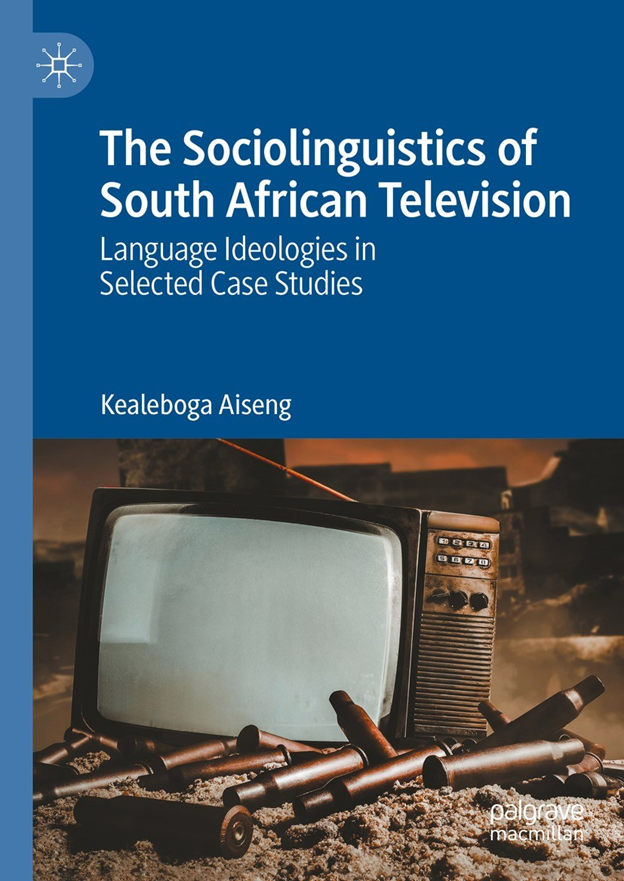 Author: Dr Kealeboga Aiseng
2024 |
Public Health Communication Challenges to Minority and Indigenous Communities (2024) |
|
Public Health Communication Challenges for Minority and Indigenous Communities proposes a solution with transformative potential. This groundbreaking edited volume invites scholars from diverse fields to contribute their research, shedding light on the linguistic dimensions of public health communication during the COVID-19 era. By investigating the impact of language on various aspects of society, from medical information to education, this book seeks to synthesize the wealth of sociolinguistic research into an accessible framework. It's an invitation to explore the role of language in shaping our perceptions of citizenship, belonging, and empowerment.
https://www.igi-global.com/book/public-health-communication-challenges-minority/323573 |
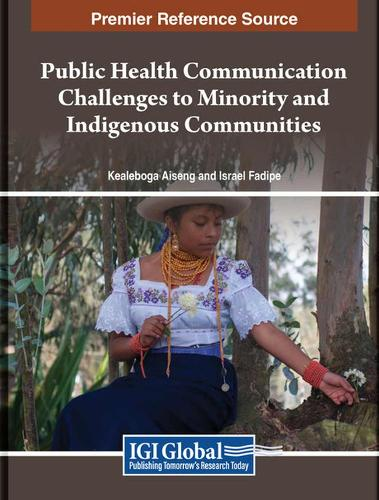 Authors: Kealeboga Aiseng (editor), Israel A. Fadipe (editor)
2024 |
Political Economy of Contemporary African Popular Culture: The Political Interplay |
|
Drawing on examples from across the continent, this volume examines socially significant aspects of contemporary African popular culture—including music cultures, fandoms, and community, mass, and digital media—to demonstrate how neoliberal politics and market forces shape the cultural landscape and vice versa. Contributors investigate the role that the media, politicians, and corporate interests play in shaping that landscape, highlight the crucial role of the African people in the production and circulation of popular culture more broadly, and, furthermore, demonstrate how popular culture can be used as a tool to resist oppressive regimes and challenge power structures in the African context. Scholars of political communication, cultural studies, and African studies will find this book particularly useful.
|
 AUTHORS: EDITED BY KEALEBOGA AISENG; ISRAEL A. FADIPE AND PHILLIP MPOFU
2022 |
Saving Journalism 2 |
|
Dr Theodora Adjin-Tettey – T.Adjin-Tettey@ru.ac.za Saving Journalism 2: Global Strategies and a Look at Investigative Journalism Authored by Anya Schiffrin, Hannah Clifford, Theodora Dame Adjin-Tettey, Ryan Lee and Matthew Reysio-Cruz. Report was funded by The Konrad-Adenauer-Stiftung (KAS). Link to report: https://www.kas.de/documents/283221/283270/Saving+Journalism+2+-+Global+Strategies+and+a+Look+at+Investigative+Journalism.pdf/a8ec2655-5636-8d69-00e5-e698e76c3845?version=1.0&t=1642517860288
|
2021 |
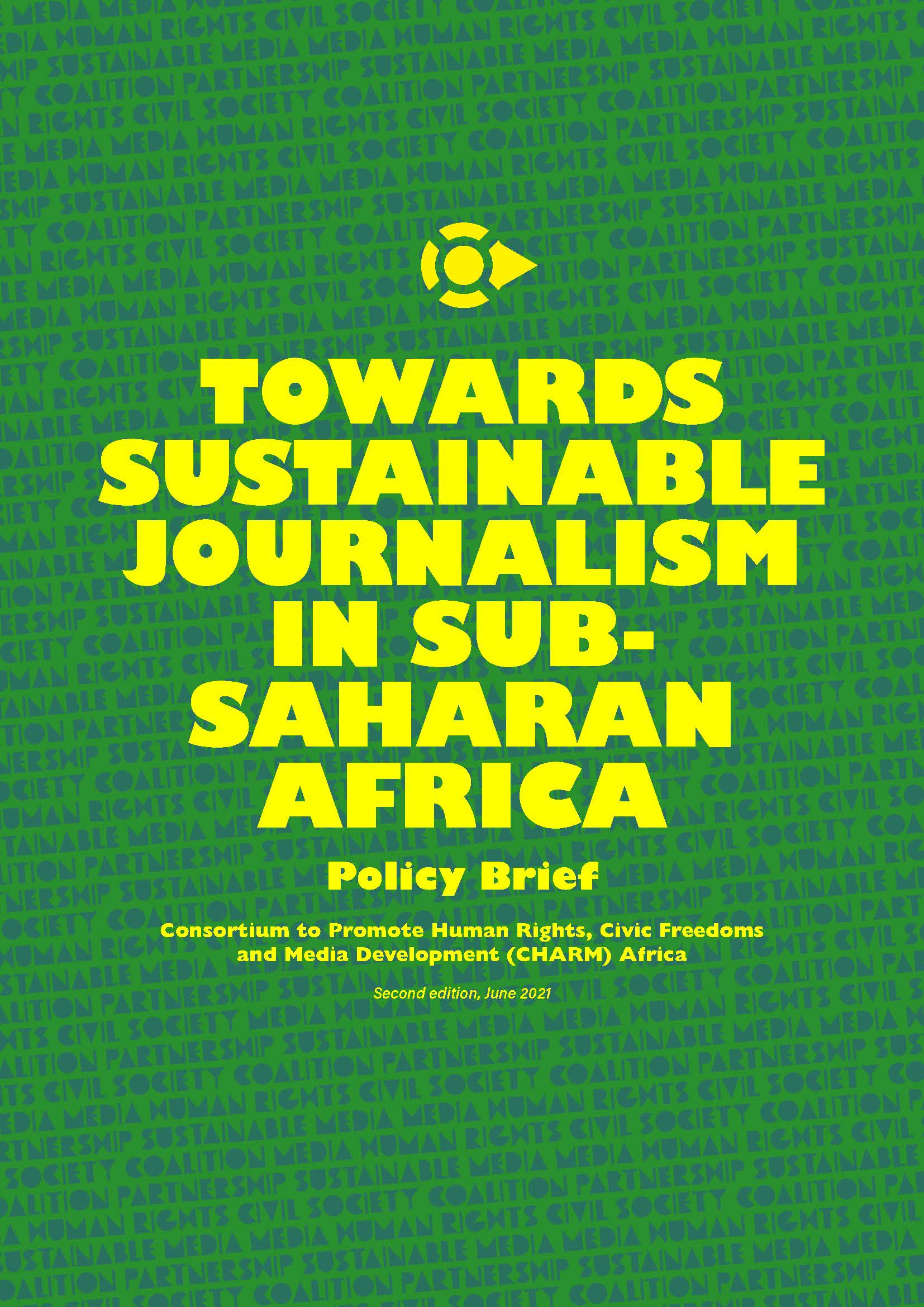
Thinking Globally, Acting Locally: Reviving and sustaining South African Journalism in a post-Covid World by Harry Dugmore, funded by the Open Society Foundation of South Africa |
|
|
2019 |
Licence to Talk (funded by the National Research Foundation) 2019-2021 |
|
Principal researcher: Prof Anthea Garman South Africa is going through a moment of powerful political rupture. This rupture is not so much with the apartheid or colonial past (despite the Fallist movements’ calls for “decolonisation”), as with the immediate democratic past which has failed to deliver on its promises of equality of all and with its own lack of credible rupture with the apartheid past. While this most recent battle has been played out on the university campuses of the country (and continues to be waged by protesters on the streets), it could be argued that the public domain is as serious and important a site of struggle for agenda-setting and new ways of knowing and talking.
In essence this is a study of the South African public sphere conducted against the backdrop of disaffection and insurgency against the ANC-controlled South African state (see Brown 2015 for just one of the analysts who has been documenting a steady uprising in poor communities against the ANC in power). It is also a study that is strongly interested in how young South Africans (poor and middle-class) behave politically, how they understand and make their place in a democracy which is hampered by its economic commitments and alignments with “predatory” economic globalisation (Gaonkar’s term 2002: 3) so that it cannot fulfil its promises to deliver decent living conditions, education and jobs. It is also strongly concerned with the use of new forms of media (digital and social) for purposes of information gaining, sharing and seizing of the news agenda. The study has a powerful interest in how digital and social forms of media are being used in this new struggle for full human personhood and in the ongoing evolution of the South African public sphere from one that had a narrow range of participants and topics to one that prioritises the concerns and challenges of a wider society. The study is also concerned with the vital need to make important theoretical ideas publicly available and to test in actual environments of public talk their efficacy. In recent years the new field of listening theory has been added to by a range of researchers who offer ways of rethinking our over reliance on the protection of speech and our devaluation of the value of listening (Bluma 2016, Couldry 2009, Crawford 2009, Dobson 2014, Dreher 2009, Eicher-Catt 2013, Lacey 2013, Lipari 2014, Ratcliffe 2000 and 1999, Tebbut 2009 and Wasserman 2013). So, the project also seeks to enter the public domain with its concerns and findings and to engage in conversations publicly about the shape and form of the public sphere. In line with Essop’s report to the Mellon Foundation (2015) which stressed the need for “reimagin(ing) the relationship between Arts Humanities and Social Sciences and the public-at-large” (2015: 11), the project will seek out and create spaces for public engagement. It will seek also to work with those who have regularly convene such spaces (either physically or via media) to see if alternate ways of hosting and convening And in this way add to the attempts being made in South African universities to stimulate and input into important public events, debates, ideas and public theorisation. |
 This study has two focuses: Firstly to ascertain the shifts and ruptures in what is said and what is sayable in the South African public sphere at this present moment in our post-apartheid history. To discern underlying regimes of truth and assess how these are being challenged and changed by a new generation of activists and intellectuals who are stepping into the public domain. Secondly, the study seeks to assess whether listening theory offers new practices for those conducting public debates, discussions and engagements, whether they be face to face encounters, via the media or on social media.
2019 |
Entrepreneurial Journalism in Africa: Opportunities, challenges and risks for media in the digital age edited by Francis Mdlongwa (funded by the Konrad Adenauer Stiftung, 2019) |
Opportunities, challenges and risks for media in the digital age Learnings from a conference held by KAS Media Africa in Accra, Ghana, 16-19 September 2018 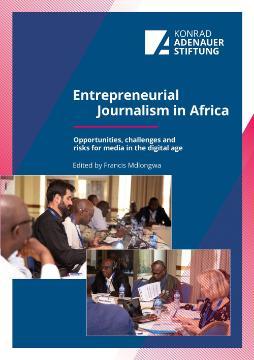 |
2018 - 2021 |
Media and Sociality (funded by the Andrew W Mellon Foundation) 2018-2021 |
|
Probing coloniality and decoloniality through the media-social belonging nexus in contemporary South Africa – Principal Investigator Prof Lynette Steenveld This research programme proposes to focus on the complex relationships between South Africa’s changing media environment and its changing political environment. The key question it is concerned with is the following: what kinds of sociality are constituted by different forms of media and how do these (forms of sociality) speak to issues of social belonging and calls for social change? By sociality, we mean how people conceptualise themselves in relation to broader society. In particular, our programme is committed to probing historical ways of being and belonging, and how these were transformed through colonialism. We use the term ‘coloniality’ to refer to what might be regarded as the ‘aftermath’ of colonialism, the long-lasting patterns of power that emerge as a result/consequence of colonialism, and that shape culture, labour, intersubjective relations, and knowledge production well beyond the limits of the colonial administrations . Coloniality thus refers to different aspects of the colonial condition: ‘coloniality of power’, ‘coloniality of knowledge’ and ‘coloniality of being’ . Each of these aspects of coloniality refers to the ways in which colonised societies are ‘stunted’ through the colonial encounter, and aspects which have to be engaged with in order to begin to free themselves from different forms of dehumanisation that have resulted from these processes. In this research programme we are particularly concerned with ‘coloniality of being’, which refers to the modes of being in the world that are a consequence coloniality in general. While new media forms are changing South Africa and the world, South Africans and people in the Global South are also reshaping the media in very particular and interesting ways. Increasingly, as neoliberal economies in the developing world allow their public infrastructure to unravel, everyone might learn from the Global South’s media models of how to survive in conditions of vast inequality, political patronymy, clientelism, and deregulation. Such media lessons extend beyond the concerns of journalism, to broader issues of media sustainability—which is understood both culturally and politically, as well as economically. People in the Global South are shaping and transforming the media in ingenious ways. It is these ingenious ways of challenging (European) modernity that Latin American scholars refer to as ‘transmodernity’. As Maldonado-Torres writes: “Transmodernity is an invitation to think modernity/coloniality critically from different epistemic positions according to the manifold experiences of subjects who suffer different dimensions of the coloniality of Being” (2007: 19). The internet, social media platforms, and digital technologies exemplify ‘the digital age’ as a marker of globalisation and (European) modernity. This research project is directed towards enquiring how these technologies and forms of media practice are being taken up by colonial subjects, and probes the ways in which their uses of the media might promote decoloniality of being, power and knowledge, and so pave the way for a ‘transmodernity’ of the South. The aims of the project are to probe the ways in which digitial and social forms of communication, knowledge-making, and archiving are being used in this new iteration of an ongoing struggle for full personhood, recognition and inclusion. The programme will explore the ways in which the digital and social media are being taken up by the ‘wretched’ of South Africa in their processes of forging new socialities, new social relationships, new knowledges, and new forms of political association as ways of challenging and transforming coloniality: of being, knowledge and power. |
2018 |
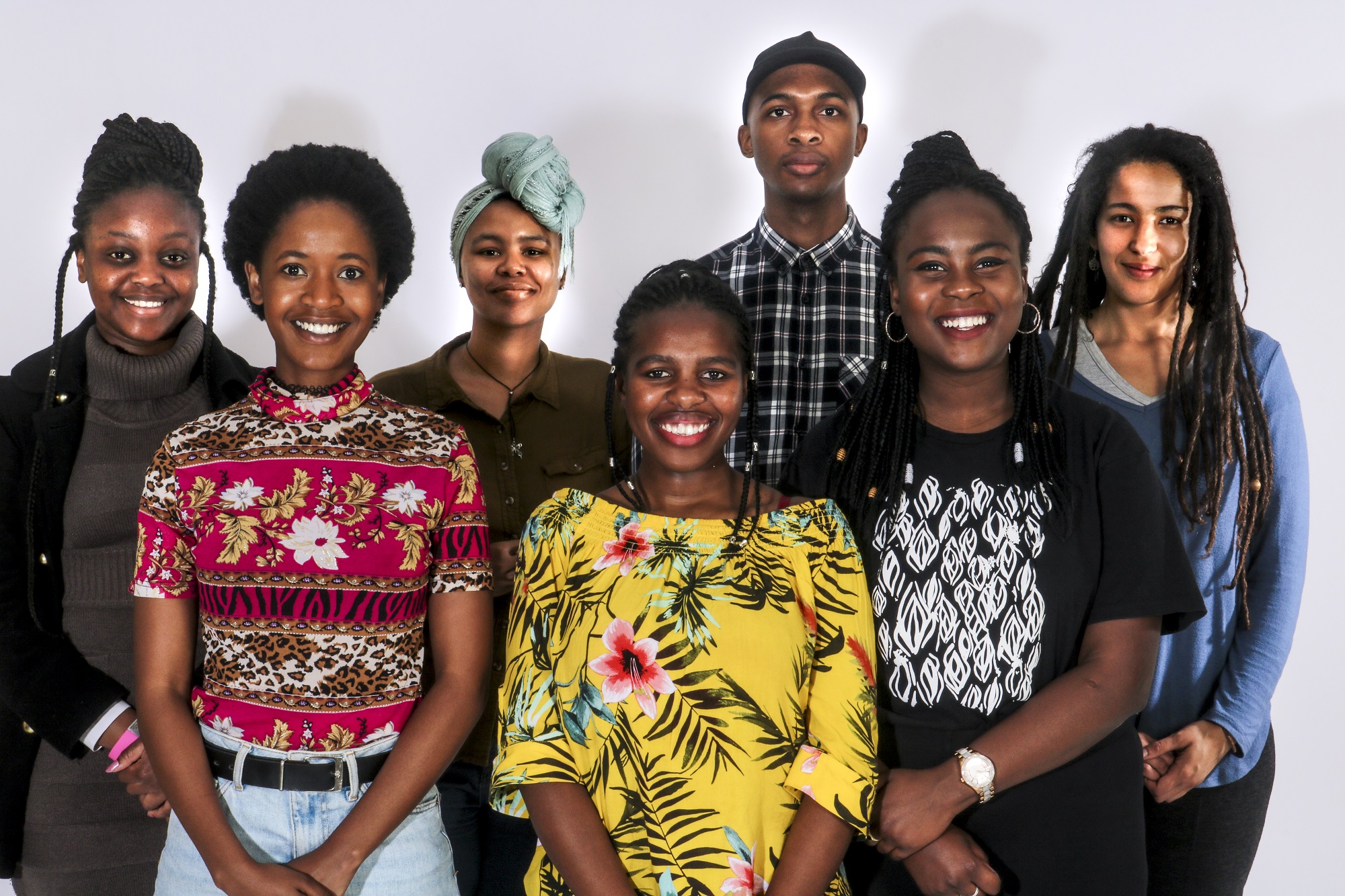
Digital Journalism Research Project (funded by OSF) – Prof Harry Dugmore |
|
|
 The rapid growth of the World Wide Web since the early 1990s, the genesis and growing ubiquity of online social media from 2004 onwards, and the proliferation of smarter mobile phones and tablet computers since 2009, have combined to induce an existential crisis for much ‘legacy’ media. The news media is arguably the most profoundly affected by digital disruption. This is a crisis of both form and content, and of revenue and business models. This in turn has wider implications for the normative roles of journalism in civic and social life globally and for the emerging democratic order in South Africa. The Digital Journalism Research Project focuses on research (and supervision of Masters and PhDs) in four areas:
2018 |
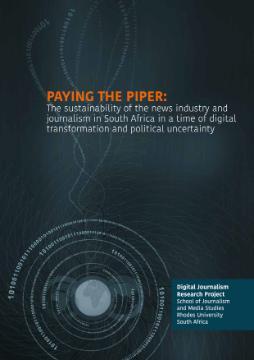
Paying the piper: The sustainability of the news industry and journalism in South Africa in a time of digital transformation and political uncertainty (funded by the Open Society Foundation, 2018) – Prof Harry Dugmore |
|
This report is an overview – and the f irst public presentation – of a wide range of research papers and reports that were commissioned during 2016 and 2017 as part of establishing Digital Journalism Research Project at Rhodes University’s School of Journalism and Media Studies. This report draws on various academic papers currently being prepared for publication in various scholarly journals. Additional fact-checking and reference-checking is still taking place (as of May 2018), and some supplementary chapters and addendums are still in the process of being prepared for release later in 2018 and early in 2019. |
HSRC Press |
Media and Citizenship: Between Marginalisation and Participation edited by Anthea Garman and Herman Wasserman. Cape Town: HSRC Press. |
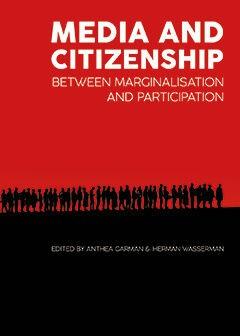 How central are the media to the functioning of democracy? Is democracy primarily about citizens using their vote? Does the expression of their voice necessarily empower citizens? Media and Citizenship challenges some assumptions about the relationship between the media and democracy in highly unequal societies like South Africa. In a post-apartheid society where an enfranchised majority is still unable to fundamentally practise their citizenship and experiences marginalisation on a daily basis, notions like listening and belonging may be more useful ways of thinking about the role of the media. In this context, protest is taken seriously as a form of political expression and the media’s role is foregrounded as actively seeking out the voices of those on the margins of society. Through a range of case studies, the contributors show how listening, both as a political concept and as a form of practice, has transformative and even radical potential for both emerging and established democracies. How central are the media to the functioning of democracy? Is democracy primarily about citizens using their vote? Does the expression of their voice necessarily empower citizens? Media and Citizenship challenges some assumptions about the relationship between the media and democracy in highly unequal societies like South Africa. In a post-apartheid society where an enfranchised majority is still unable to fundamentally practise their citizenship and experiences marginalisation on a daily basis, notions like listening and belonging may be more useful ways of thinking about the role of the media. In this context, protest is taken seriously as a form of political expression and the media’s role is foregrounded as actively seeking out the voices of those on the margins of society. Through a range of case studies, the contributors show how listening, both as a political concept and as a form of practice, has transformative and even radical potential for both emerging and established democracies.
|
2017 |
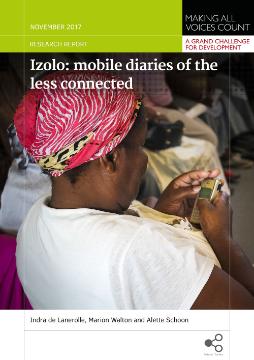
Izolo: mobile diaries of the less connected: Making all voices count by Indra de Lanerolle, Marion Walton and Alette Schoon, 2017 |
|
Izolo: mobile diaries of the less connected (2017) -- Dr Alette Schoon (RU), Indra de Lanerolle (Wits) and Dr Marion Walton (UCT) A significant body of evidence points to a strong relationship between those who are economically, socially and/or politically marginalised, and those who are marginalised in their access to, and use of, ICTs. The main purpose of this report is to explore and understand the role of the mobile phone in the lives of the less connected in South Africa. The less connected, as identified for this report are those who, if they use the Internet at all, use it mainly or only on their mobile phones; whose home languages are under-represented online; and who largely depend on mobile operator networks for their connectivity, since they do not have fixed-line connections at home. Research sought to explore what kind of experiences of being connected these people have, and what role the mobile phone plays in their everyday lives. To do this, the authors developed a new diary interview method to construct the mobile diaries of more than 80 people in three locations in urban and rural South Africa. The diaries are based on mobile activities on the day before the interviews of the users took place, or 'yesterday' – Izolo in isiXhosa and isiZulu, two of South Africa’s most commonly spoken indigenous languages. NRF-RATED RESEARCHERS - SCHOOL OF JOURNALISM AND MEDIA STUDIES The National Research Foundation (NRF) rating in South Africa is a significant indicator of a scholar’s research excellence and impact as perceived by international peer reviewers. The NRF rating system is designed to benchmark the quality of researchers against the best in the world, thereby contributing to building a globally competitive science system in South Africa.
|
2011 - 2016 |
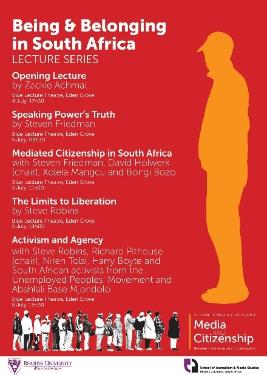
Media & Citizenship (funded by the Andrew W Mellon Foundation and the NRF, 2011-2016) – Prof Anthea Garman and Prof Herman Wasserman |
|
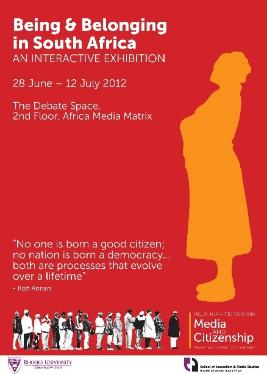
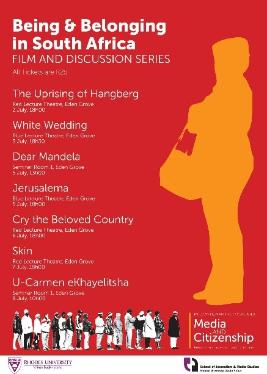
The project sought to establish, through empirical research, to what extent South African media across a wide variety of outlets and expressions facilitates democratic participation and voice in the public sphere, especially for the most marginalised of citizens. The project investigated how notions of media, citizenship and democracy are articulated in actually-existing social contexts and thus aimed to provide a better understanding of how media could contribute to the improvement of democratic participation.
|
Last Modified: Mon, 08 Dec 2025 09:42:54 SAST